( Custom Pizza Boxes ) The thermodynamic and marketing performance of custom pizza boxes is fundamentally dictated by the substrate color and material composition. In the commercial foodservice sector, packaging serves as both a thermal insulator and a brand distribution vector. Selecting between Kraft, white, and black custom pizza boxes requires a clinical analysis of raw material science, printing constraints, and cost per unit.
Kraft (Unbleached) Paperboard
Kraft paperboard is manufactured from wood pulp utilizing a chemical process that minimizes lignin breakdown, preserving long wood fibers. This unbleached material retains a natural brown color.
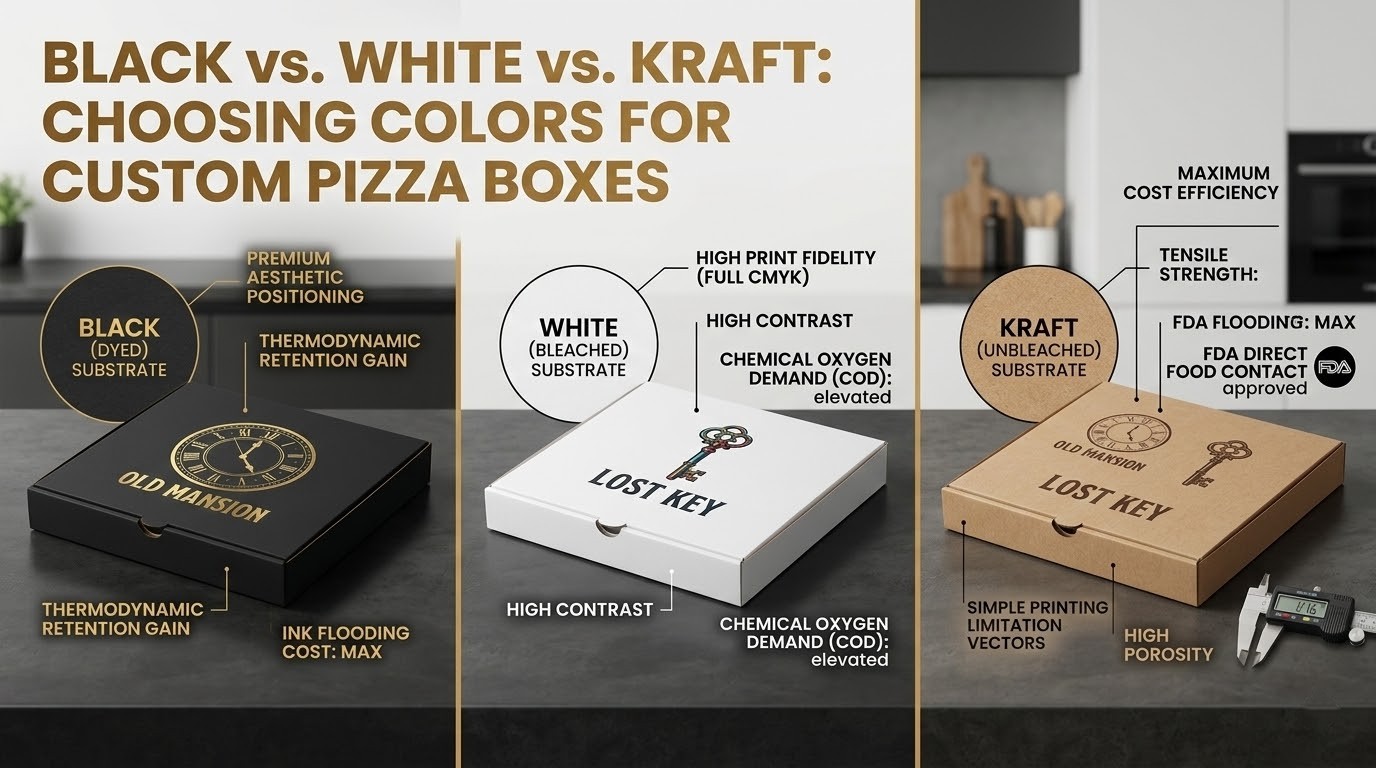
- Cost Efficiency: Kraft bypasses the extensive bleaching processes required for white paperboard, rendering it the most cost-effective substrate.
- Mechanical Strength: The preserved long fibers yield superior tear resistance and tensile strength.
- Moisture Management: Kraft board possesses high porosity. It absorbs excess grease and internal condensation, mitigating the degradation of the pizza crust during transit.
When engineering custom pizza boxes for high-volume operations, Kraft provides baseline thermal retention at the lowest unit cost. The natural aesthetic of Kraft board also aligns with organic or farm-to-table brand positioning, signaling an eco-conscious operational model to the end consumer without requiring additional printed text. However, the dark, porous surface restricts printing to dark inks and simple flexographic vectors.
White (Bleached) Paperboard
White corrugated board is produced by subjecting raw wood pulp to chemical bleaching. This process creates a uniform, high-contrast surface.
- Print Fidelity: The white surface acts as a blank canvas, enabling high-resolution CMYK color reproduction, sharp typography, and complex gradients that Kraft cannot support.
- Cost Premium: The chemical refinement processes increase the base cost of the material compared to unbleached Kraft.
Operators utilizing multi-color logos or intricate vector illustrations must default to white substrates to prevent color distortion caused by the underlying brown hue of unbleached Kraft. Brands prioritizing visual impact utilize white custom pizza boxes to execute complex graphic designs. The structural integrity of these boxes must be maintained utilizing appropriate flute dimensions, identical to the engineering parameters discussed in our analysis of E-Flute vs. B-Flute architecture.
Black (Printed or Dyed) Paperboard
Black packaging is utilized to position the product as a premium or artisanal commodity. Black substrates are achieved either through flooding a white or Kraft board with black ink during the printing process or by utilizing pre-dyed black paperboard.
- Thermodynamic Properties: Black surfaces absorb and retain infrared heat more effectively than reflective surfaces. In specific localized delivery parameters, black packaging provides a marginal advantage in internal temperature maintenance.
- Aesthetic Positioning: High-contrast metallic foils or spot UV coatings applied over black substrates communicate high-end brand positioning.
- Ink Saturation: Flooding a standard board with black ink requires high ink volumes, increasing the unit cost and extending curing times.
Environmental Impact and Compliance
The ecological footprint of the packaging substrate is a quantifiable metric in modern supply chain management. Kraft paperboard is inherently biodegradable and requires significantly less water and chemical input during manufacturing. Its unbleached state results in a lower chemical oxygen demand (COD) in wastewater. White paperboard, while recyclable, introduces bleaching agents into the manufacturing cycle. Black paperboard, particularly when achieved through heavy ink flooding, complicates the recycling process. Paper recovery facilities frequently reject heavily dyed boards, reducing their post-consumer recovery rate. Selecting custom pizza boxes based on color directly impacts the operation’s corporate sustainability index.
Regardless of the exterior color, the interior linerboard must adhere to strict FDA regulations for direct food contact. Industrial printing must utilize food-grade, water-based inks to prevent chemical migration into the food product. Furthermore, the exterior specifications must align with the structural footprint optimizations utilized in modern cardboard display boxes merchandising.
Summary of Specifications
- Kraft: Maximum cost efficiency, superior tensile strength, limited print capabilities.
- White: High-resolution print fidelity, elevated unit cost, standard thermal retention.
- Black: Premium aesthetic positioning, marginal heat retention advantages, highest production cost.
The procurement of custom pizza boxes necessitates aligning the substrate color with the specific print fidelity, budget constraints, and thermal transit requirements of the operation.