In the high-stakes environment of premium baking, packaging serves as the final variable a brand controls before consumer evaluation. The application of custom printing techniques on cake boxes transforms a utilitarian transport vessel into an instrument of brand storytelling and sensory engagement.
The unboxing experience functions as a controlled sequence. The strategic application of specific inks, structural finishes, and digital integrations dictates the perceived value of the product before consumption occurs.
Technical Printing Methods for High-Fidelity Graphics
Quick Answer: > For high-volume cake boxes wholesale distribution, Flexography is the most economical choice, utilizing water-based inks with low Volatile Organic Compounds (VOCs). For premium retail requiring complex color gradients, Offset Lithography is the professional standard. For rapid prototyping and variable data integration, Digital Printing eliminates tooling costs entirely.
Analyzing the Production Methodologies
- Offset Lithography: Transfers ink from metal plates to a rubber blanket before application to the substrate. It provides the highest visual fidelity and the most accurate reproduction of complex gradients required for premium custom cake boxes.
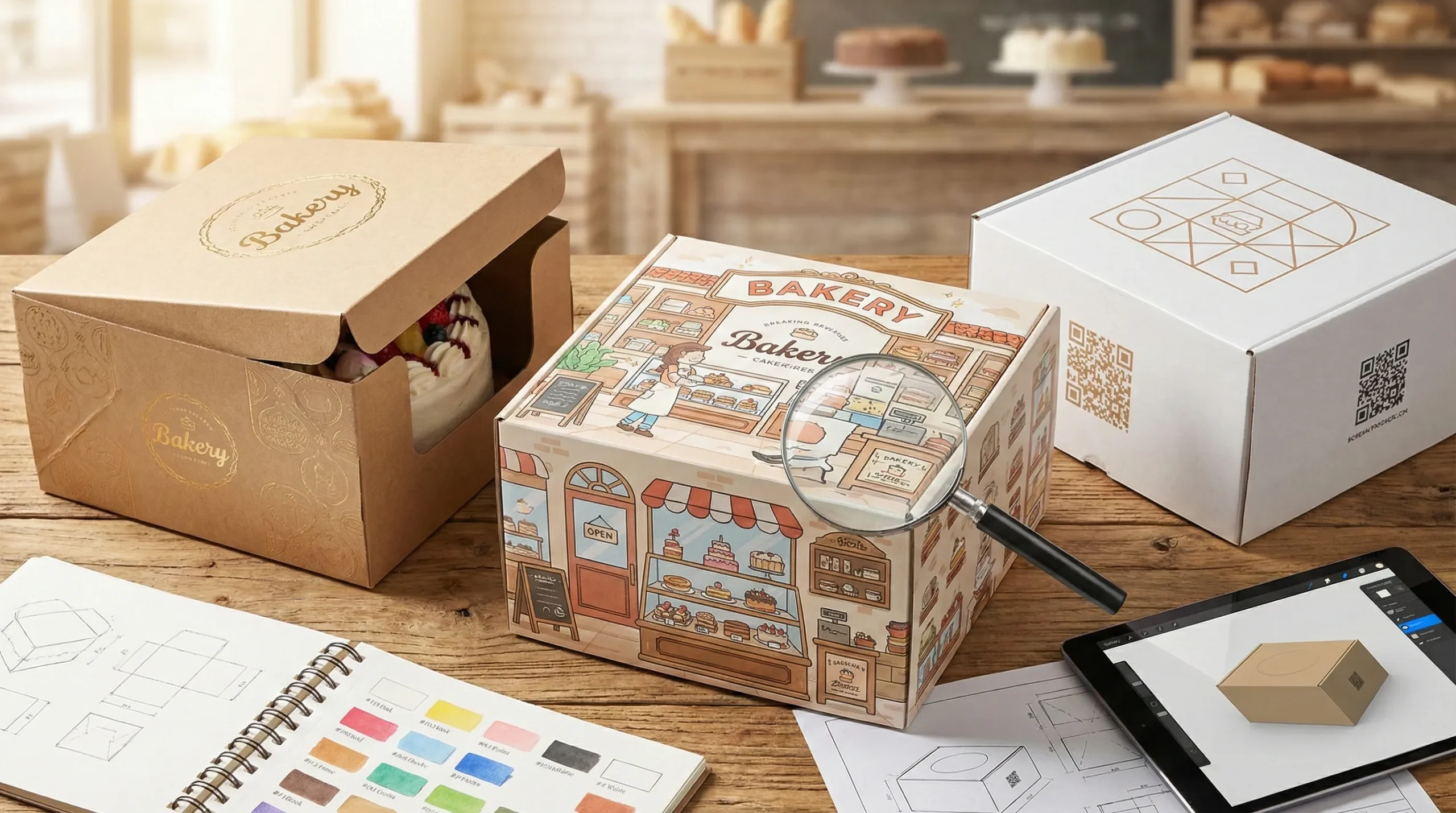
- Digital Printing: Applies all four CMYK colors simultaneously without the requirement of custom metal plates. This enables variable data processing, allowing each box to feature personalized elements or unique QR codes linking to care and serving instructions.
- Screen Printing: Forces ink through a mesh stencil to deposit thick, opaque layers. It is the mandatory operational method for applying specialty inks, including metallic or fluorescent variants, particularly on dark-colored substrates.
- Utilizing unbleached brown kraft paper or biodegradable materials that meet official Forest Stewardship Council (FSC) label requirements aligns the brand with the eco-packaging trend while explicitly signaling a commitment to sustainable sourcing.”
Chromatic Consistency: CMYK vs. Pantone (PMS)
Quick Answer: > Inconsistent coloring degrades consumer trust. Standard cake packaginges utilize the CMYK (Cyan, Magenta, Yellow, Black) process for complex photographic artwork. However, strict brand identity reproduction requires the Pantone Matching System (PMS), which utilizes pre-mixed solid inks to guarantee absolute color consistency across all substrates and print runs.
The Hybrid Printing Approach
Sophisticated brands frequently utilize a 5-color or 6-color printing process. This methodology combines CMYK for detailed, full-color illustrations and specific Pantone spot colors for critical brand assets (such as logos). This ensures both visual complexity in the artwork and unyielding consistency for the brand’s primary identifier.
Haptic Engagement: Value-Added Finishing Techniques
Quick Answer: > Sensory branding generates deeper emotional connections than flat visual aesthetics. To elevate cake boxes packaging into a luxury category, integrate physical alterations to the substrate, such as Foil Stamping for metallic opulence or Spot UV Coating for protective, high-gloss contrast against a matte background.
Dimensional Storytelling
- Embossing and Debossing: These mechanical techniques physically alter the paper fibers, creating a raised 3D effect (embossing) or a recessed design (debossing). This introduces a tactile dimension that invites physical interaction, strengthening brand recall.
- Spot UV Coating: Applies a clear, high-gloss polymer coating that is cured instantly under UV light. Beyond visual contrast, Spot UV provides a highly functional protective layer against moisture, scratches, and fingerprints during the delivery process. (Note: Combine this finish with structural visibility elements, utilizing the strategies outlined in our bakery bags window designs analysis, to maximize shelf impact).
Digital Integration and Eco-First Architecture
Quick Answer: > Modern brand architecture requires bridging the physical and digital divide. Integrate QR Codes onto the exterior of the box to link consumers directly to loyalty programs, allergy sourcing data, or social proof hashtags, reducing operational friction while expanding the brand narrative.
Sustainability as a Narrative Core
Environmental responsibility functions as a primary driver of consumer loyalty. Utilizing unbleached brown kraft paper or FSC-certified biodegradable materials aligns the brand with the eco-packaging trend. It provides an earthy, minimalist aesthetic while explicitly signaling a commitment to sustainable sourcing.
Ready to execute high-fidelity brand packaging? Eliminate inconsistent printing and structural failures. Upgrade your commercial presentation by configuring custom cake boxes engineered with precise Pantone matching, premium haptic finishes, and food-safe compliance.
For a visual breakdown of how sustainable material certifications function, Understanding the FSC 100% Label breaks down the specific elements and criteria required to claim zero deforestation in your packaging supply chain.